

Many kitchen and bathroom remodeling business owners wonder if their websites are successfully generating estimate requests or if a silent problem is causing potential leads to slip away. Understanding whether a website is truly costing you leads requires careful evaluation beyond gut feelings or assumptions. This guide helps you identify measurable clues, consider external factors, and prioritize what to fix first.
Recognizing Symptoms That Your Website Might Be Underperforming
Before jumping to conclusions, look for concrete signs that your website might be limiting your lead flow:
- Drop or stagnation in estimate inquiries despite steady or increasing website traffic.
- High bounce rates on your key pages like ‘Request Estimate’ or ‘Contact Us,’ indicating visitors leave quickly.
- Low conversion rates (visitors who fill out your forms or call your number) compared to traffic.
- Negative or no engagement with calls to action (CTAs) such as click-to-call buttons or contact forms.
For example, if your analytics show 1,000 visitors monthly but only 3 make contact inquiries, it points to a conversion issue, even if your site is attracting visitors.
How to Diagnose Website Issues Using Measurable Data
Use basic web analytics tools like Google Analytics or your hosting dashboard to check the following metrics:
- Traffic sources: Are visitors arriving via local search, social media, or referrals? Low quality or untargeted traffic reduces lead potential.
- Behavior flow: Analyze which pages visitors visit first, where they drop off, and how many proceed to your contact or estimate form pages.
- Mobile responsiveness: Check if mobile visitors experience slow load times or layout issues, as this impacts usability.
- Form completion stats: Are users starting but not finishing your estimate request forms? Form length, complexity, or errors could be barriers.
These data points give you clues about what parts of your site may need attention, whether content, technical performance, or user experience.
Considering Non-Website Factors Affecting Lead Volume
A poor lead volume does not automatically mean your website is flawed. Other external causes include:
- Competitive landscape: More remodeling businesses or aggressive marketing from competitors can reduce your share of inquiries.
- Market demand variations: Seasonal dips or local economic changes affect homeowner remodeling interest.
- Advertising and SEO effectiveness: Limited promotion or poor search engine visibility means lower qualified traffic.
- Sales process readiness: If your staff are slow to respond or the estimate process is inconvenient, visitors may hesitate to initiate contact.
Identifying such factors helps you avoid misattributing lead issues to the website alone.
Examples of Site Issues That Can Lose Leads in Remodeling
Illustrative example: A kitchen remodeling company’s website features a dense homepage with heavy text but no clear call-to-action above the fold. Visitors arrive via mobile but struggle to find an easy-to-fill estimate form. Analytics reveal high bounce rates on the homepage and underused contact forms. This indicates usability and clarity issues rather than a need to scrap the entire site.
Other common web issues include:
- Slow page load times, especially on image-heavy portfolio pages.
- Outdated design causing users to question the business’s professionalism.
- Complicated navigation making visitors unsure how to request estimates.
- Lack of visible phone numbers or contact options on all pages.
When to Optimize Your Existing Website Versus Considering a Redesign
Optimization focuses on improving specific areas — content, calls to action, speed, mobile usability — without rebuilding from scratch. Redesign means creating a new aesthetic structure and often new functionality.
Consider optimization first if:
- Your website’s core platform and structure are reasonably current and functional.
- Analytics suggest particular pages or forms are causing friction.
- Your traffic volume is steady but conversions are low.
- Budget or timing constraints limit extensive redevelopment.
Consider a redesign if:
- Your site is very outdated (e.g., uses obsolete technology or design that hurts credibility).
- User testing reveals widespread frustration with navigation or trust signals.
- Your brand identity or messaging has changed significantly, requiring a fresh approach.
- Optimization efforts have not materially improved leads over a reasonable timeframe.
Checklist: What to Check, Change, and Ask When Evaluating Your Website
- Check:
- Current website analytics for traffic, bounce, and conversion metrics.
- Page load speed on desktop and mobile devices.
- Mobile friendliness using tools like Google’s Mobile-Friendly Test.
- Contact forms and calls to action placement and functionality.
- Content clarity: is it easy to understand your services and next steps?
- Visible and consistent phone numbers and contact info across pages.
- Change:
- Simplify or shorten estimate request forms.
- Improve call-to-action visibility above the fold.
- Optimize images and scripts to speed up load time.
- Test and fix broken links or errors.
- Update content to reflect current offerings and value propositions.
- Ask your agency or developer:
- Can user experience improvements boost conversions without a full redesign?
- What SEO strategies are in place to improve local search visibility?
- Are technical optimizations needed to comply with accessibility and best practices?
- What would be the estimated timeline and cost range to implement suggested fixes?
- Can ongoing monitoring be set up to track lead form engagement?
Next Steps for Remodeling Business Owners
Start by gathering your website’s basic performance data and comparing it against your business lead generation patterns. Identify any clear disconnects in visitor behavior or form usage. Then apply priority fixes to website usability and messaging where needed. Meanwhile, assess offline factors like marketing, competition, and sales process that influence leads.
Only after exhausting optimization and external improvements should you consider a full redesign. This measured approach saves time and expense while potentially restoring or increasing estimate requests.
Remember, your website is a key business asset, but it works best when performance issues are understood and addressed with clear priorities and realistic expectations.
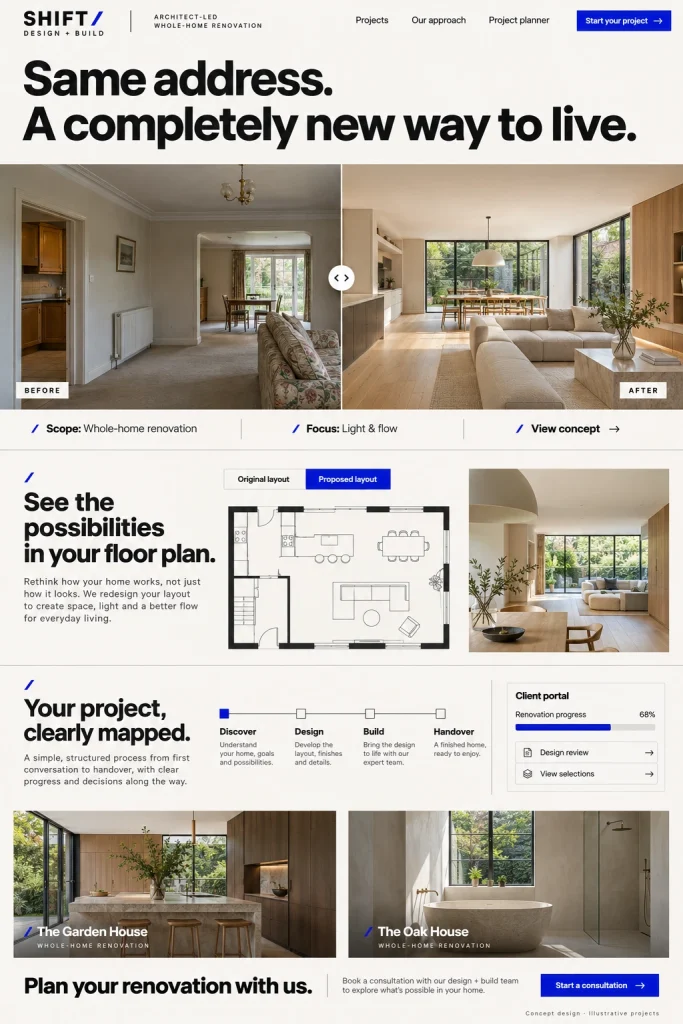
Explore what a better website could look like
Not every business needs a full redesign. If you are considering improvements, explore ProWeb’s illustrative website concepts for kitchen & bathroom remodeling. You can also request a free initial homepage design preview to discuss a direction for your business, without an obligation to proceed.
